The foundational ingredient of any sauce is stock. Great stock is created by following a framework.
The same goes for competitive analysis, true greatness lies in your ability to apply a great framework to tease out learnings and reveal strategy.
Chef Thomas Keller, of The French Laundry, on making sauce:

Chef Thomas Keller
You can’t have a good sauce if you start with bad stock… the ideology of a stock is important. The idea is to remove through gentle heat, the flavor and gelatin of the bones and meat while continuously removing the impurities… Every step of the way you remove impurities. Everything follows from this.”
–The French Laundry Cookbook
Following a competitive analysis framework is integral to creating clear competitive strategy.
Frameworks Matter
Frameworks help us avoid the pitfalls of spinning our wheels analyzing bad data and chasing rabbits down the wrong holes. They clarify our output, minimize our confirmation bias, and ultimately speed analysis up. And importantly frameworks make our process repeatable, improvable, and extensible.
In Michael Porter’s words, “frameworks bridge the gap between theory and practice.”
A framework gives us a systematic way of approaching a problem so we keep what’s good and get rid of the junk.
Like making stock we skim off the bad data. The reports that don’t make sense to the overall narrative — the dead end analyses. Throw out the charts that don’t provide clarity.
By following a solid framework you’re left with strategic liquid gold.

Framework Step #1: Work Clean – Identify Your Objective
Line cooks prepare their ingredients first because they know execution is matters. Mise en place, “everything in place.”
If the food sucks, customers send it back and never return. It’s an vicious feedback loop. There’s no margin for shitty execution, life comes at you very quickly.
Anthony Bourdain understood the importance of good setup:

Anthony Bourdain – Good setup is key to avoid the garbage pile in your head
Mise en place is the religion of all good line cooks. Do not f*ck with a line cook’s “meez”… If you let your mise-en-place run down get dirty and disorganized, you’ll quickly find yourself spinning in place and calling for back up… That’s what the inside of your head looks like now. Work clean.
–Kitchen Confidential
Your competitive analysis can be ruined by the stock you use. This happens when we rush through the setup process. Bad input = bad output.
While speed can be a way to gain competitive advantage in a market, moving forward without clear, obtainable objectives is a mistake analysts (and teams) make too often.
Hastiness is most often caused by urgency to show results — but bad execution is disastrous, and time consuming.
“We’re at a critical moment, our leaders and some of our great institutions are failing us. Why? Because often they’ve taken us to the wrong objectives. And this is unacceptable.” says John Doerr, famous disciple of the great Andy Grove. (Grove invented OKRs).
In the OKR system, asking the right questions at the right time is essential to deliver results. No rushed choices, no bad objectives. Be diligent.
Q: Why are you building your competitive analysis?
A: ____________________________________________.
This is your objective, THIS is the first step in building your framework.
The plans of the diligent lead surely to advantage, But everyone who is hasty comes surely to poverty.
– Proverbs 21:5
Framework Step #2: Alway Skim Impurities — Document, Question, and Challenge Your Key Assumptions
Foam will float to the surface as you boil the bones, meat scraps, and vegetables in the first phase of stock building. This is normal. The key to amazing stock is skimming the coagulated blood and fat as it accumulates on the surface. If you don’t, you’ll be left with a cloudy stock that has the impurities emulsified in it.
Your stock will not be “bad”, but in order to clarify it you will have to throw a bunch away as you strain it. Attention to detail and process here will ensure you get the most yield.
Informal impressions, rumor, intuition, and tidbits of information are the scum that floats to the top of our stock. If ignored assumptions are catastrophic to both the quality and impact of your analysis.

Dangerous assumptions can creep into managerial thinking about competitors. A further difficulty is that in-depth competitor analysis requires a great deal of data, much of which is not easy to find without considerable hard work. Many companies do not collect information about competitors in a systematic fashion, but act on the basis of informal impressions, conjectures, and intuition gained through the tidbits of information about competitors every manager continually receives. Yet the lack of good information makes it very hard to do sophisticated competitor analysis.
— Michael Porter, Competitive Strategy
Identify assumptions early so you can address, prove or disprove them in your analysis.
“Challenging assumptions is critical to intellectual and emotional growth,” says Stacy King, in his great write up on Assumption Analysis.
You must test your company’s, your boss’, and your own key assumptions before moving deeper into the competitive analysis process. Uncovering assumptions will drive toward impact and away from unprofitable or misleading analysis.
“Facts can be verified and opinions can not,” says King. This key assumption identification phase is our assurance that we’re working toward meet our objective, not actively working against it.
What do some of these assumptions sound like?
- “Paid search doesn’t work for our business.”
- “SEO will take too long to be effective.”
- “We should have more organic traffic vs. our competitors.”
- “We can’t spend more on our acquisition budget profitably.”
- “X brand is our biggest competitor.”
- “Y brand is not our competitor.”
- “Z brand is eating our lunch.”
- “We don’t need to worry about Z brand, they’re too small.”
- “Organic social does not help brand awareness.”
- “We should invest in Facebook advertising.”
- “Branded paid search is a waste of money.”
- “We shouldn’t invest in analytics.”
- “Our best customers are men between 35-45 years old”
The key point is we expose the internal assumptions before we get cracking at the competitive analysis. I add these assumptions to my Excel document for quick access throughout the process.
Framework Step #3: Reduce Your Stock Gently by 50% – Identify the Data That Matters to Your Brand
Once you’ve heated your bones and vegetables long enough for them to release most of the impurities, it’s time to slowly and gently, over low heat, reduce the volume of the liquid by half. This will condense the flavor and clarify the stock.
The key is not fancy ingredients or days of preparation, but rather a simple technique: repeated reducing and deglazing.
-Thomas Keller – Secrets of the Sauce Masters
This is the stage where attention to detail in steps 1-3 comes together into a cohesive plan of action. With enough data points to compare and contrast your brand versus your competitors you can start pulling and dumping all your data into a repository.
The first step to the competitive analysis framework is creating a spreadsheet listing as much “relevant” data for my brand as I can. These data points are my initial moorings to start building the competitive analysis framework.
I work quickly at this stage. The goal is intentional, I want to find and record as many interesting data points as I can. To save time I avoid analysis (as much as I can), focusing on making sure I’m pulling, categorizing, and tagging the data points that are relevant to my own brand.
Having a solid identification system in place will help you avoid the rigamarole of wondering where your data came from, which system or report you pulled it from.
This process is shaped by the type of competitive analysis you’re performing. A few types of competitive analysis:
- Traffic/Channel
- Customer acquisition
- SEO
- SEM
- Brand awareness
- Brand value chain
- Keyword GAP analysis
- Content GAP analysis
- Social media (paid and organic)
- Authority
- UI or UX
- Technology
- Email or Marketing Lifecycle
I speed up the process by using tools like Ahrefs or SEMRush. Throw all your data into Excel or Google Sheets. Read about our favorite competitive analysis tools here.
Framework Step #4: From Stock to Sauce – Putting It All Together
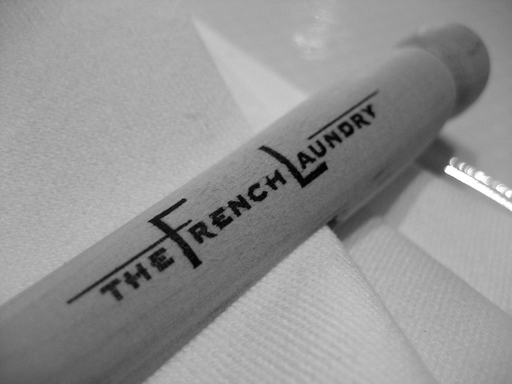
I need to eat at The French Laundry… someday!
As you become more proficient using this competitive analysis framework and your tools the process will go faster, however it’s important to remember Porter’s words, “the lack of good information makes it very hard to do sophisticated competitor analysis.“
The quality of your ingredients are an absolute essential aspect of your ability to build both a “sophisticated competitor analysis.” Or an amazing sauce. However the best ingredient can be ruined without the right framework or knowledge to process it.
Our next step is to get our hands dirty building our competitive analysis.
Competitive Analysis Framework Recap:
| STEP | COOKING LESSON | COMPETITIVE ANALYSIS |
|---|---|---|
| Framework Step #1 | Work Clean | Identify Your Objective |
| Framework Step #2 | Skim Impurities From Your Stock | Document, Question, and Challenge Your Key Assumptions |
| Framework Step #3 | Reduce the Stock Gently by 50% | Identify the Data That Matters to Your Brand |
| Framework Step #4 | From Stock to Sauce | Put It All Together |